Dereje T. Abzaw 👋
Innovative Full Stack Developer 🖥️ & AI Engineer with 8+ Years in Software & AI

Innovative Full Stack Developer 🖥️ & AI Engineer with 8+ Years in Software & AI
Task For:
Services:
Well log data is essential in the oil and gas industry for subsurface analysis, reservoir characterization, and decision-making processes. The LAS (Log ASCII Standard) format is widely used for storing well log data, but handling multiple LAS files from different sources can be challenging. Integrating these files manually is time-consuming, error-prone, and inefficient. The LASMerger tool leverages the lasio Python library to streamline the merging of multiple LAS files into a cohesive dataset, enhancing data analysis and visualization workflows. The primary goal is to simplify data integration, improve accuracy, and enable more efficient analysis of well log data, ultimately supporting better decision-making in subsurface evaluations.
Research: The research focused on existing methods for handling LAS files and identified inefficiencies in manual merging processes. Traditional approaches often involve manual editing or basic concatenation methods, which can lead to data inconsistencies and increased errors. The lasio library, designed for parsing and writing LAS files, provides a robust framework for automating this process.Key studies explored the use of Python in geoscience data management, emphasizing the need for automation in well log data integration. The project utilized datasets from various wells, including LAS files with different logging curves, depths, and measurement units. The lasio library's capabilities were extended to handle discrepancies in headers, curve names, and depth alignment, ensuring data integrity during merging. Transfer learning in data handling practices and Python-based automation techniques were adapted to enhance the tool's performance, ensuring consistent and accurate data merging across various datasets.
Information Architecture: The LASMerger system architecture combines Python scripting with the lasio library to create an efficient LAS file merging workflow.
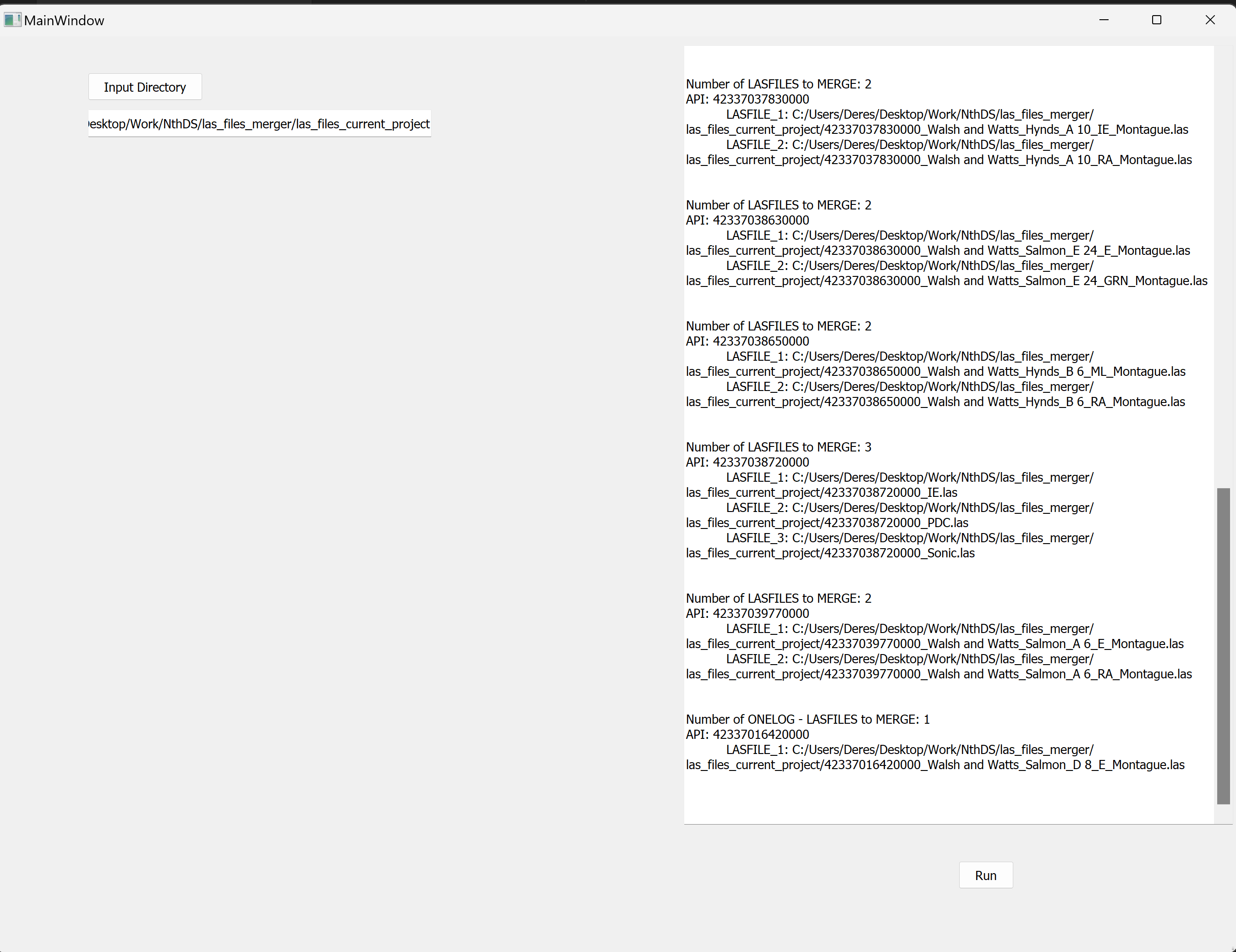
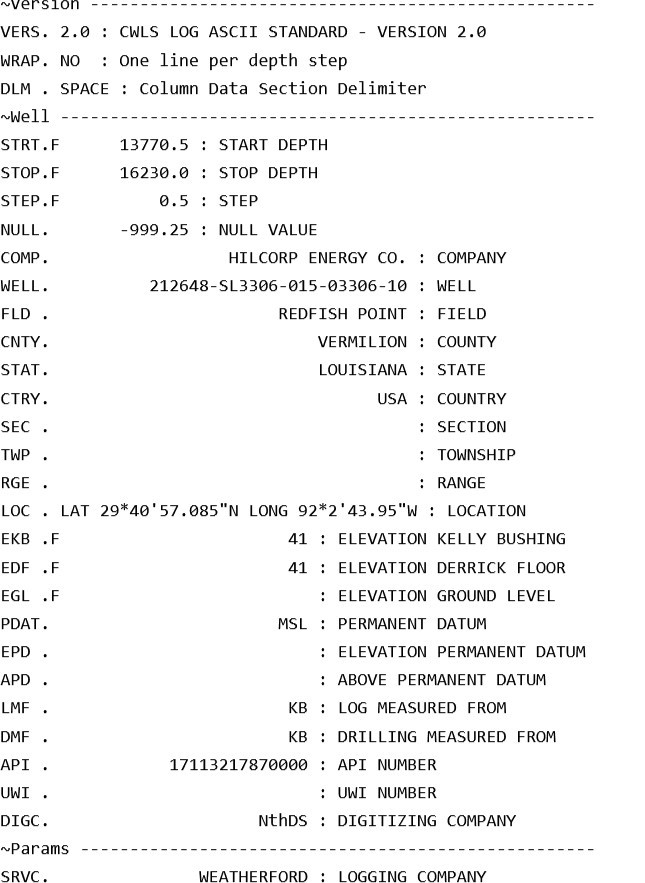
Merging LAS files presents several challenges, including inconsistencies in header metadata, curve naming conflicts, depth alignment issues, data gaps, and processing large datasets efficiently. These challenges complicate data integration, leading to errors and inefficiencies in well log analysis workflows.
The LASMerger tool successfully streamlined the integration of multiple LAS files, achieving high accuracy and significantly reducing processing times. Testing on diverse well datasets showed that the merged outputs maintained data integrity, with a considerable accuracy in curve alignment and depth matching. Processing time for large datasets was reduced greatly enhancing workflow efficiency. The automated header standardization, curve conflict resolution, and depth alignment modules minimized user intervention and errors, ensuring reliable and consistent data merging. The system's ability to handle large datasets efficiently makes it a valuable tool for geoscientists, reducing manual workload and allowing for more in-depth analysis and visualization of well log data. In conclusion, LASMerger demonstrates how Python and the lasio library can enhance well log data integration processes, improving accuracy, consistency, and processing speed. This tool supports more efficient decision-making in subsurface evaluations and sets the foundation for future enhancements, including integration with advanced data analytics and visualization platforms.